
The interim government’s ban on Bangladesh’s largest political party undermines democracy, empowers extremists, and threatens…
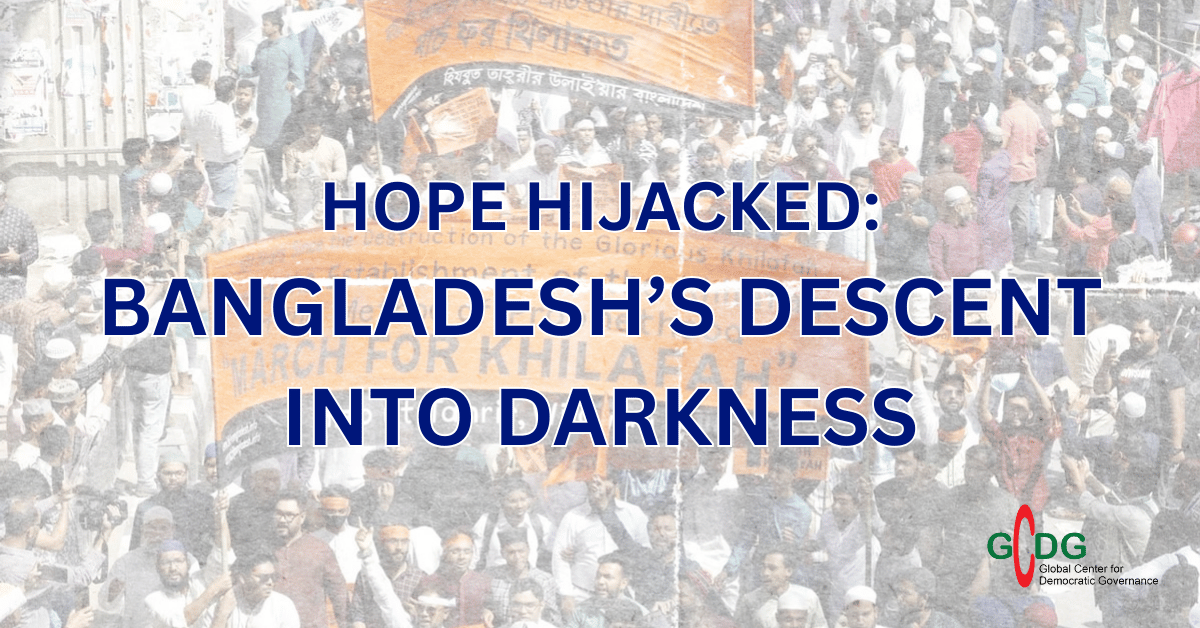
Hope Hijacked: Bangladesh’s Descent into Darkness
Bangladesh, a nation born from the secular ideals of its 1971 Liberation War, now finds itself at a precipice. What began as a student-led movement for equitable quota reforms in government jobs has been systematically hijacked by anti-liberation forces—both domestic actors and foreign-backed elements—transforming peaceful demands into a nationwide crisis. The country that Prime Minister Sheikh Hasina elevated to middle-income status, with landmark achievements in digital governance and women’s empowerment, now resembles a fractured state. Under the interim administration of Dr Yunus, whose takeover was described by himself as “meticulously designed,” Bangladesh has spiraled into lawlessness, institutional collapse, and communal violence. This article dissects the multidimensional crisis unfolding since mid-2024, exposing how the erosion of democracy, rule of law, and social cohesion threatens the very fabric of the nation.
Collapse of Law and Order: A State in Anarchy
The unraveling began in July 2024, when protests over quota reforms escalated into coordinated attacks on state institutions. Within weeks, the police force—once praised for counterterrorism successes—became a target itself. 5,829 firearms and 600,000 rounds of ammunition were looted from police armories, with less than 20% recovered. The Home Ministry’s directive to halt prosecutions for crimes committed during the unrest effectively granted impunity to perpetrators, including those responsible for the deaths of 44 police officers.
The vacuum was filled by armed gangs and 700 escaped prisoners, many linked to opposition factions. Crime syndicates, now better equipped than local law enforcement, drove a 300% increase in kidnappings and a 178% spike in armed robberies (Bangladesh Police Bureau, 2025). Political violence became endemic. More than 246 Awami League (AL) leaders and supporters have been killed in mob attacks, 460 police stations were burned or vandalized, and former ministers were ambushed while traveling to court. This was not mere chaos but a calculated dismantling of state authority—a pattern echoing the 1975 coup that killed Bangabandhu Sheikh Mujibur Rahman.
Human Rights Catastrophe: Minorities, Women, and Dissent Under Fire
Communal Targeting
Post-August 2024, 2184 documented attacks targeted Hindu, Buddhist, and Christian communities. In one emblematic case, a Hindu temple in Narail was razed while police stood idle. The toll: 9 killed, 4 women raped as communal weapons, 69 temples and 1,200 homes destroyed. The last few months have seen instances of brutal attacks on minorities – for allegedly hurting religious sentiments – and places of worship.
Weaponized Justice
The judiciary has become a tool of repression. Over 2337 politically motivated cases implicated 1.1 million AL supporters, with 430000 detained—including elected officials and teachers. The amended Anti-Terrorism Act suspended AL activities, a move the UN called ‘a blatant criminalization of opposition’.
Gender Apartheid
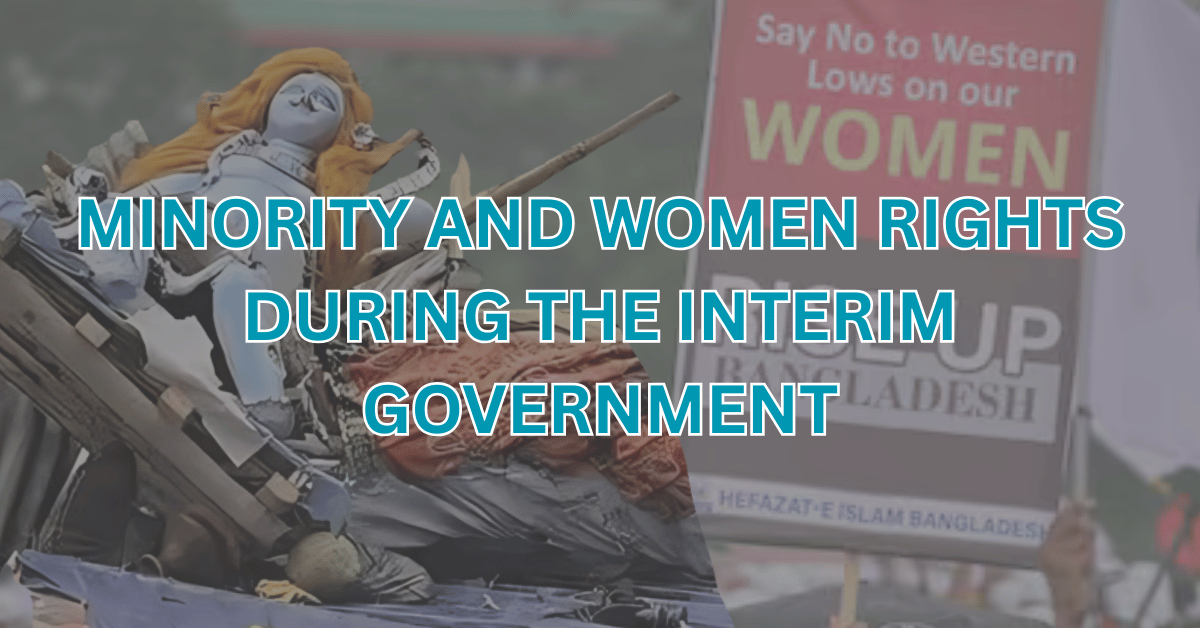
The UN documented that state-coordinated sexual violence has occurred against female protesters. Survivors reported rape threats by security forces during arrests. Meanwhile, 87.5% of 2025’s rape victims were minors (ASF Report, 2025), reflecting a society where impunity empowers predators. Islamist radicals, who strongly back the Yunus regime, recently hit the streets demanding trashing of a Women’s Reform Commission report that recommended equal rights for women in matters of inheritance, divorce, property and marriage. Videos of Islamist radicals stripping a woman’s effigy and beating it with shoes went viral after the protest rally.
Media silenced
Bangladeshi media is facing serious suppression and systematic repression. Although it promised press freedom, the reality, however, is different. Reports suggest that criminal cases have been filed against 432 journalists, the accreditation of about 168 journalists has been cancelled, and inquiries have been initiated against 73 journalists by the Bangladesh Financial Intelligence Unit, the anti-terror and anti-money laundering arm of the government. More than 41 imprisoned journalists are not getting bail, even though it’s the right of the citizens.
Extortion culture
The fact that The Daily Star — a newspaper that had been a cheerleader of Yunus for years — commented on the rising trend of extortion across Bangladesh in a recent editorial makes it clear that the situation is grave. The BNP and NCP people are heavily involved in extortion. People of all quarters are victims of massive extortion.
Institutional Sabotage: From Courts to Classrooms
Institutions are dead now. The Supreme Court was gutted and 13 High Court judges, including Chief Justice were removed via opaque ‘disciplinary proceedings’. In a grotesque irony, courts expedited appeals for war crime convicts while denying bail to AL members. Education has turned into a battleground. Universities, once hubs of pluralism, are now dominated by Islamist factions. All public university VCs have been forced to resign. More than 200 secular professors have been barred from teaching, and 230950+ students are deprived of their basic rights for opposing extremism.
Security Meltdown and the Militant Resurgence
The interim government’s appointments of dual-citizen officials to key security posts raised alarms. Meanwhile, 312 convicted militants have been released, including Jamaat-ul-Mujahideen (JMB) operatives; 70 militants escaped prison, joining 382 already at large. Report says, looted police weapons appeared in 12 extremist attacks in 2025. Intelligence reports confirm collaborations between escaped prisoners and Rohingya insurgents—a transnational threat in the making. Rising fundamentalism in Bangladesh has surged since August 2024, with Jamaat-e-Islami, Hejot-e-Islami, Hizb-ut-Tahrir, and others extremist political parties taking a prominent role in politics. The escape or release of radicals has enabled extremist regrouping.
Cultural Genocide: Erasing the Liberation Spirit
The assault on Bangladesh’s secular heritage has been systematic and increasing day by day. More than 1500 sculptures, murals, statues and monuments have been destroyed across the country. At least 63 attacks have been reported on cultural activists and 22 art academy have been attacked across the country. More than 107 Sufi shrines were attacked, vandalized, looting and arson have occurred which is a clear targeting of pluralistic Islam and due to the obstruction of the extremist groups 321 annual festival has been banned. This isn’t mere vandalism but an ideological purge, mirroring the Taliban’s destruction of Bamyan Buddhas.
Economic Paralysis: From Growth to Grief
The economy is very gloomy. The IMF’s $4.7 billion loan failed to stem the collapse. GDP growth has dropped to less than 4% (from 7.2% in 2023). Inflation has already hit 11.3%, with rice prices doubling. As of today, 1.8 million jobs have been lost, mostly for women in garments. The informal sector—80% of employment—faces starvation-level wages. The World Bank has predicted a 3.3 per cent growth in GDP in FY25, reducing it from its earlier projection of 4.1 per cent made in October 2024.
Conclusion: A Nation at Crossroads
Bangladesh’s crisis is neither accidental nor spontaneous. It’s the culmination of a 50-year ideological war between secular nationalism and religious revanchism. The Yunus interregnum, far from being a corrective, has accelerated state capture by extremists.
The author is a Professor of a University
Related Posts
Comments (0)