
Evidence-Based Human Rights Appeal Protection of Fundamental Rights and Academic Freedom of University Teachers in…
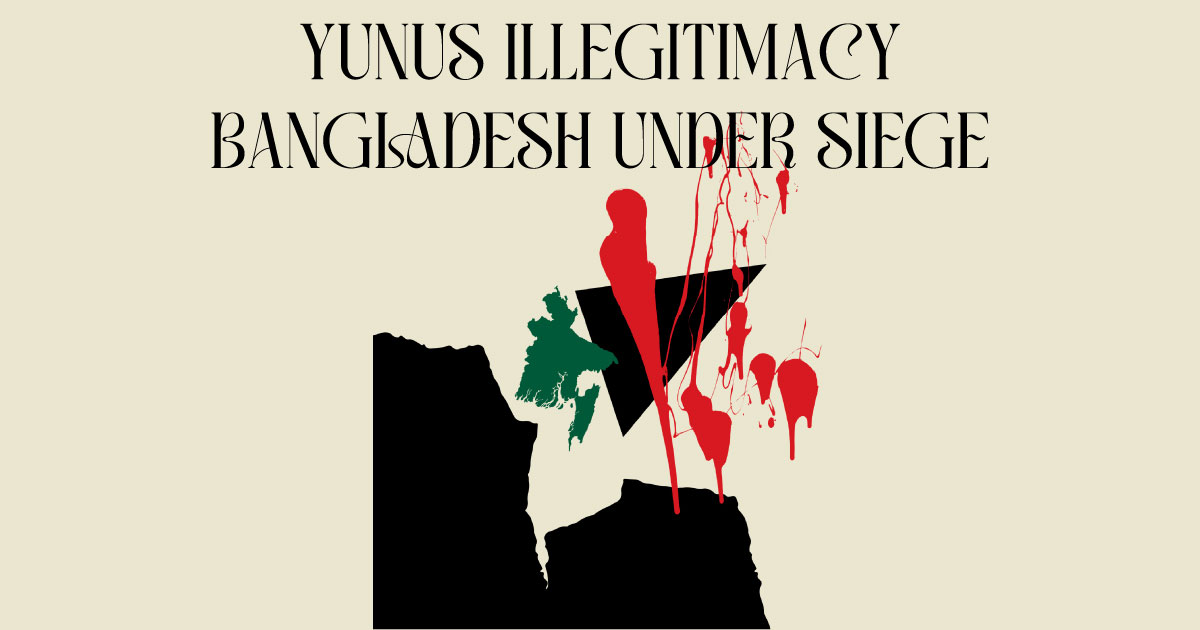
Yunus Illegitimacy – Bangladesh Under Siege
This book arises from a moment of cataclysmic rupture in Bangladesh’s recent history. The sequence of events that has unfolded since 5 August 2024 has not merely disrupted the distribution of political power; it has fundamentally disfigured state institutions, distorted public narratives, and mutilated the moral orientation of governance. What was initially framed as a political transition rapidly revealed itself as dislocation with a far-reaching crisis encompassing governance, legitimacy, the economy, justice, and social cohesion. This book represents an effort to document, interrogate, and critically analyze that multifaceted crisis.
The chapters assembled here are written against the backdrop of the interim government led by Nobel Laureate Dr. Muhammad Yunus—a development that, at its inception, was widely regarded as hopeful and received considerable international approbation. Over time, however, that optimism gave way to growing unease. Rather than a smooth progression toward democratic consolidation and political stability, Bangladesh experienced diplomatic disarray, economic deceleration, institutional erosion, and an alarming resurgence of religious extremism. Promises of reform increasingly receded beneath the weight of repression, uncertainty, and social fragmentation.
This book assesses the first year of Dr. Yunus’s tenure, and that all articles rely exclusively on data collected
prior to August 2025. An effort will be made to produce a subsequent edition covering the entire period of his rule, at which point a clearer and more comprehensive picture may emerge.
This edited collection of scholarly articles and essays does not advance a singular or unified narrative. Instead, it brings together a range of critical perspectives—political, legal, economic, historical, and social—to examine what went wrong, why it went wrong, and for whom. Several chapters scrutinize the legitimacy and constitutional standing of the interim government, questioning whether it was grounded in a genuine popular mandate or whether it exercised authority through procedural ambiguity. Others analyze the erosion of democratic safeguards, including assaults on the judiciary, the press, academic freedom, and civil liberties.
A substantial portion of the book is devoted to the economic consequences of the transition: the slowdown in growth, the collapse of investor confidence, turbulence in the stock market, the destruction of local industry, and the broader perception of an “economic eclipse.” These analyses challenge prevailing global assumptions about technocratic competence and raise unsettling questions about governance conducted under the shadow of international patronage.
Equally central to this work is an examination of the human cost of the crisis. Articles focusing on women, children, ethnic and religious minorities, university teachers, and journalists document a disturbing pattern of repression, violence, and silencing. The destruction of cultural and religious heritage, the rise of mob violence and looting, and the normalization of fear are treated not
as isolated incidents but as manifestations of a deeper moral and institutional decay.
The volume also engages critically with history and collective memory. By challenging efforts to frame the July-August 2024 movement as a continuation of the Liberation War of 1971, contributors caution against the instrumentalization of national history for political purposes. At the same time, earlier periods—most notably the BNP–Jamaat era—are revisited to situate the current resurgence of extremism within a broader historical context.
Finally, this collection is marked by a tone of diminishing optimism. Moving beyond analysis alone, the chapters express profound concern about Bangladesh’s future—an anxiety widely shared among citizens who perceive the erosion of sovereignty, the hollowing out of institutions, and the repeated deferral of democratic aspirations.
This book is intended for scholars, journalists, policymakers, activists, and engaged readers who seek to understand not only what has occurred in Bangladesh since August 2024, but why it matters. It stands as a record of dissent, a warning against complacency, and an appeal to reclaim democratic accountability. Whether one agrees or disagrees with its arguments, the questions raised here are inescapable—for Bangladesh stands at a critical crossroads, and silence is no longer a neutral option.
Related Posts
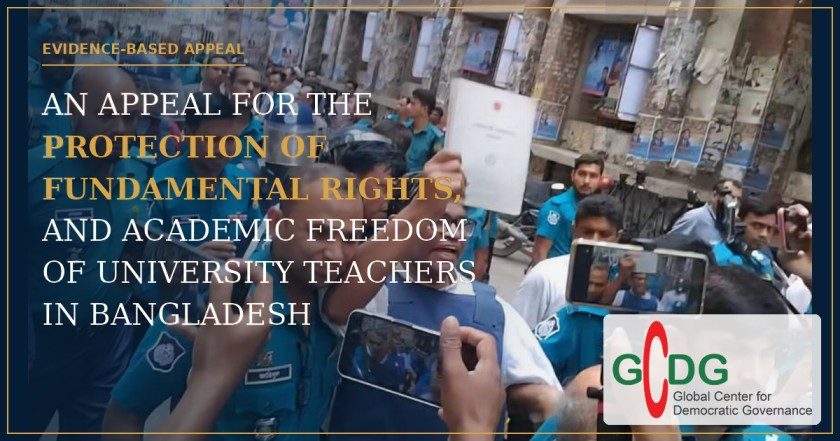
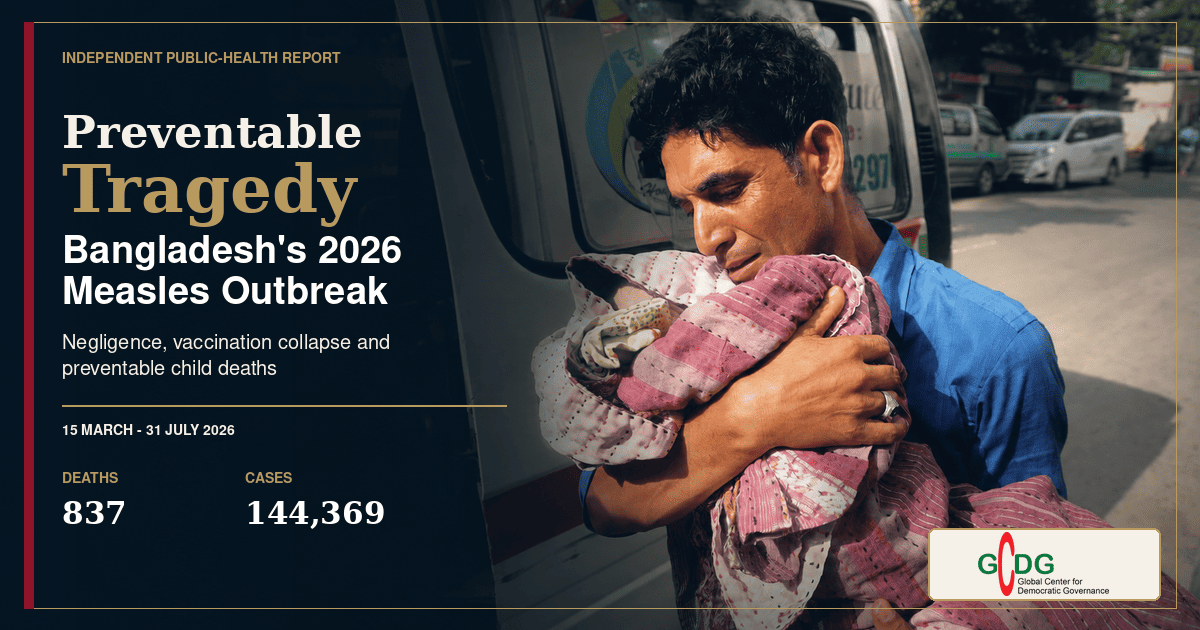
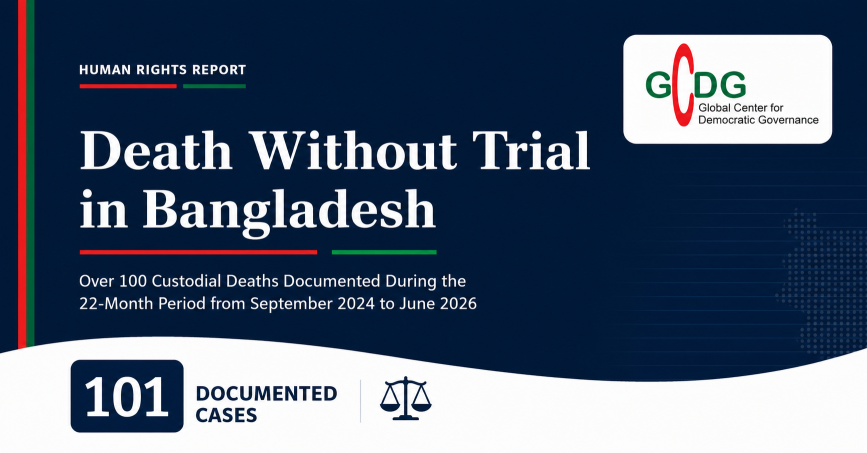
It’s a good piece of authentic database factual information that happened in Bangladesh during the tenure of Muhammad Yunus’s illegitimate government indeed. Anyone can use the same information to know and understand the truth of regime change and the gross violations of human rights, rule of law and the constitutional rights of the country.